Market Resilience Amid War’s Economic Uncertainty
Economic Resilience is at the forefront of discussions surrounding the ongoing war in Iran and its global repercussions.
Despite initial fears of a catastrophic economic fallout, the markets have shown surprising strength.
This article delves into the dynamics that have shaped the financial landscape in the wake of conflict, exploring the rebounds in major indices, the influence of artificial intelligence on growth, rising oil prices, and their effects on transportation costs, as well as the challenges faced by farmers and the growing concern of food insecurity.
Global Economic Overview Six Months On
Six months after the war in Iran began, the global economy has proved more resilient than many feared.
Predictions of collapse did not fully occur, even though the conflict first shook investor confidence and pushed major U.S. indexes lower.
Then, as markets adapted to the shock, the Dow, the S&P 500, and the Nasdaq recovered with significant gains, helped in part by optimism around artificial intelligence and stronger earnings expectations.
However, the picture remains mixed because higher oil prices lifted transportation costs, airline fares stayed elevated, and farmers faced sharper pressure from expensive fertilizer.
At the same time, demand for electric vehicles increased as households and businesses looked for cleaner energy options.
This uneven outcome shows that the war disrupted key sectors, but it also revealed how quickly markets can rebound when growth drivers remain strong.
Stock Market Sentiment and Index Recovery
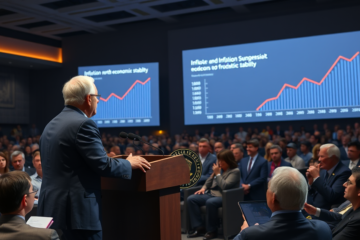
Financial markets reacted with an initial plunge as geopolitical tension flared but renewed investor confidence and solid corporate earnings fueled an equally impressive upswing showcasing enduring market resilience.
The swift recovery highlights the adaptability of investors in the face of uncertainty and the role of strong fundamentals in driving sentiment.
As illustrated in the numbers below, the market’s ability to rebound reflects a deeper optimism among market participants.
Index Performance Snapshot
| Index | Pre-War | Post-Shock Low | Six-Month Mark |
|---|---|---|---|
| Dow | 34,000 | 31,200 | 36,500 |
| S&P 500 | 4,200 | 3,850 | 4,600 |
| Nasdaq | 14,000 | 12,300 | 15,200 |
Artificial Intelligence-Driven Resilience
AI optimism sustained growth even as the Iran war shook markets, because investors kept rewarding companies that could turn disruption into productivity gains.
At first, stocks fell on the rise in uncertainty, yet the Dow, S&P 500, and Nasdaq rebounded as capital chased firms building AI-powered innovation.
Reuters and IMF-linked reporting noted that the global economy absorbed part of the shock through intense spending on models, chips, and enterprise software, which helped offset weaker sentiment in other sectors.
That resilience also showed up in real economic activity.
Major technology groups expanded data-center capacity, while manufacturers and logistics providers used automation to lower costs and protect margins.
Meanwhile, oil-driven inflation pushed transport fares higher, but demand for electric vehicles strengthened as households and fleets searched for cleaner and more efficient energy choices.
In agriculture, however, the war raised fertilizer costs and left many farmers under strain, showing that AI-led growth could cushion markets without fully shielding every part of the economy.
- Scaling chip fabrication to meet training demand
- Deploying enterprise analytics tools that automate decisions
- Expanding autonomous logistics pilots across supply chains
Energy Costs and Transportation
The ongoing conflict has significantly impacted global supply routes, leading to a surge in oil prices.
This increase has quickly permeated logistics budgets across various sectors, including airlines, trucking companies, and shipping firms.
As a result, these carriers have been compelled to transfer the burden onto passengers through elevated airline ticket fares, highlighting the ongoing sensitivity of mobility expenses to fluctuations in the energy market.
Electric Vehicle Sales Boom
Six months after the war in Iran pushed fuel markets into volatility, consumers and fleet operators quickly shifted toward clean energy sources as a practical shield against rising transport costs, and that urgency helped electric vehicle sales surge to record levels.
Moreover, higher gasoline and diesel prices made every trip more expensive, while expanding charging networks, tax incentives, and stronger model availability improved the case for EV adoption.
According to the IEA’s global electric car market analysis, sales continued climbing sharply, showing how war-driven fuel uncertainty can accelerate the transition away from fossil fuels and toward cleaner, lower-cost mobility.
Agriculture Under Pressure
Six months after the war in Iran began, fertilizer markets still felt the shock.
Energy disruptions, shipping delays, and plant shutdowns pushed farmers to pay far more for key inputs, and that change quickly spread through planting decisions and harvest expectations.
As costs climbed, many growers cut fertilizer use, which lowered yields and tightened grain and vegetable supplies.
Consequently, the pressure moved beyond farm budgets and into household diets, raising the risk of food insecurity in countries that rely on imports and in regions where people already spend most of their income on food.
The World Bank and other analysts warned that sustained fertilizer price increases could deepen hunger by shrinking production, lifting staple prices, and straining aid systems.
At the same time, small farms faced the greatest damage because they had less cash, less storage, and fewer ways to absorb the shock.
Source: fertilizer and food security reporting on Iran war impacts.
- Smallholder farmers with limited access to credit
- Low-income consumers facing higher food prices
- Aid organizations supporting hunger relief
In conclusion, while the war in Iran has undeniably impacted various sectors, the resilience demonstrated by the markets and innovations in technology have mitigated some adverse effects.
However, ongoing challenges remain, particularly for farmers and food security.

0 comentários